
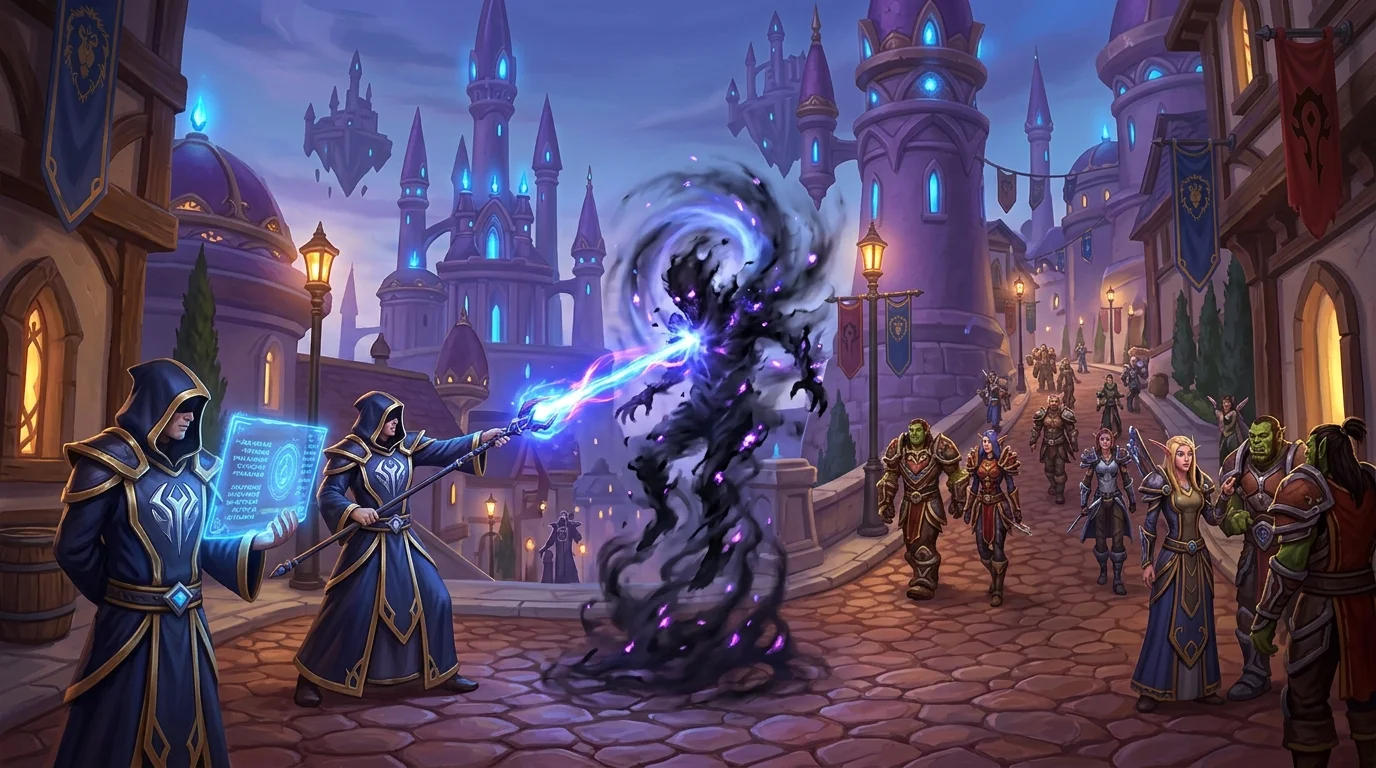
Anti-cheat, weekly bugfixes and transparency — how we take care of server health
The pillars of safety and stability
A healthy private WoW server relies on three pillars working together: active security, continuous bug fix, and transparent communication with the community.
In Azeroth Legacy, these three pillars are treated as a technical priority — not a crisis response.
Active safety means that the anti-cheat system monitors behaviors in real time, detecting anomalous patterns before they damage the experience of other players. It's not just banning after the fact — it's identifying before.
Continuous fix means that reported bugs enter the triage, playback, and fix cycle on a regular basis. They don't accumulate.
Transparency means the community knows what has been fixed, what is under review, and what is planned.
How the bugfix and communication cycle works
The correction process follows defined steps:
- Report — player identifies and reports with reproducible detail
- Screening — team assesses priority (gameplay-breaking vs. cosmetic)
- Playback — bug is confirmed in test environment
- Correction — fix developed and tested in-house
- Deploy — applied to server with changelog grade
- Confirmation — community is informed of resolution
Critical bugs (that break progression or generate unfair advantage) have top priority and accelerated cycling.
Examples of recurring improvements
Common adjustments that go through this cycle regularly:
- Boss script fixes that did not work as in retail
- Mobs spawn and respawn adjustments in questing zones
- Proc mechanics reviews and skill cooldown
- Balancing drops and loot rates
- Performance optimizations at peak times
The role of the community in technical feedback
The community is the biggest source of problem detection. No internal team can test all possible scenarios — active players find edge cases that only appear in real conditions.
Therefore, well-made reports have real value. A report with steps to reproduce, class/spec, zone, and expected vs. observed behavior accelerates correction in hours, not days.
Server health indicators
Some signs that show that the server is working well:
- Stable uptime — rare drops and communicated in advance when planned
- Changelog active — regular updates with description of what has changed
- Status channel — real-time maintenance and incident information
- Response time to reports — critical bugs handled quickly, not ignored
Tracking these indicators helps to understand whether the server is evolving or stagnating.
Posts Recomendados
How to report bugs and contribute to the server
A good bug report can speed up a fix from days to hours. See how to make reports that really help — and the mistakes that cause your ticket to be ignored.
How anti-cheat works — and what happens when someone gets caught
Azeroth Legacy's anti-cheat system monitors behavior in real time. Understand how it works, what punishments exist and how to avoid false positives.
Azeroth Legacy under construction: where we are
Where Azeroth Legacy stands: a WotLK 3.3.5a server in testing, a community being built and no launch date yet. See what exists and how to follow along.
Punishments and appeals (ban appeal): clear rules and how to appeal correctly
Punishments on the server don't necessarily mean the end. Learn the types of punishment, how the ban appeal works and how to request a fair review.