
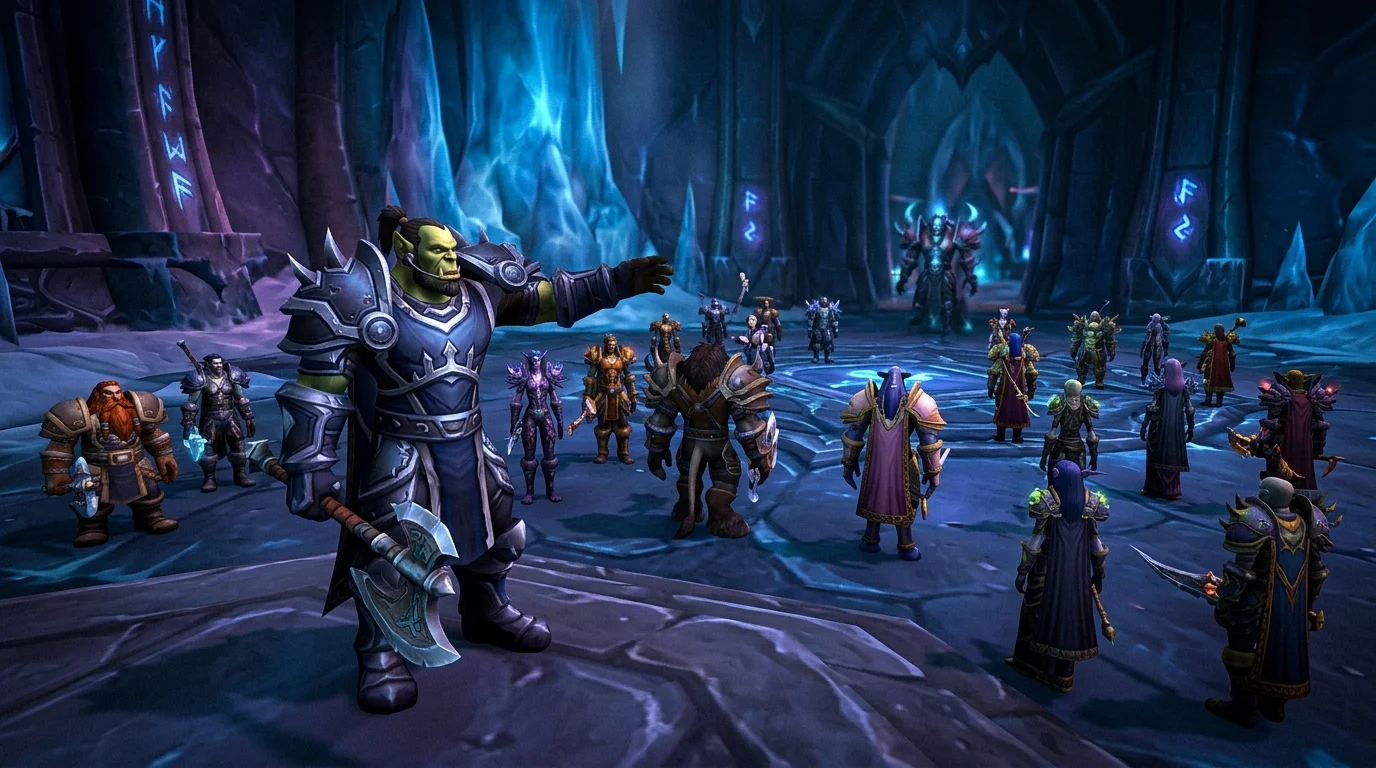
What does a Raid Leader actually do?
A lot of people think that RL is just the person who gives ready check and shouts in voice when the raid dies. This is a bad caricature of the function.
The real Raid Leader does three things:
- prepares the raid beforehand
- organizes execution during
- adjusts the structure later
He doesn't need to know everything himself, but he needs to transform the raid into something readable for the group.
RL's real role before the raid
Before the raid, your job is to reduce future chaos.
You need to:
- confirm roster and composition
- know which encounters are a priority
- map cooldowns, buffs and utilities
- prepare simple calls per phase
- align expectations of the night
Raids that enter without a plan force RL to improvise everything. And excessive improvisation is always costly.
Actual role of RL during the raid
During the raid, the RL does not exist to narrate every second of the boss. They exist to:
- keep the group on plan
- call what really matters
- hold the rhythm
- avoid collective panic
- adjust when the attempt goes beyond what was planned
The worst RL is the one who talks too much and still doesn't make anything clearer.
Real role of RL after the raid
After the raid, the job is to turn attempts into learning.
You need to come away with simple answers:
- what worked?
- where did the raid collapse?
- Was it a gear, execution or composition problem?
- what changes next night?
Without this step, the raid will only repeat the error with more fatigue.
How to prepare simple and effective callouts
A good call is not long. It's useful.
Call structure that works:
- what will happen
- who needs to act
- when you need to act
Mental example:
- “next phase, tank swap”
- “raid cooldown now”
- “melee out”
- “target X first”
What to avoid
- long speech in critical phase
- explain entire mechanics in the midst of chaos
- call five things at the same time
- use voice as an emotional outlet
Short and clear calls beat dramatic calls.
Communication structure to avoid chaos
A simple structure solves a lot:
Before pull
- objective of the try
- most dangerous point
- agreed cooldowns
- main call for each phase
During pull
- only the essentials
- priority
- phase
- cooldown
- emergency
After the wipe
- main cause
- main adjustment
- next attempt
If each wipe turns into a disorderly debate, the raid wears out more than it learns.
Common leadership mistakes at the beginning of a career
1. Talking too much
Excessive voice is also confusing.
2. Lead through improvisation
Without minimal preparation, the raid becomes a lottery.
3. Change everything with each wipe
Not every error calls for revolution.
4. Confusing authority with tension
Firm RL doesn't have to be chaotic.
5. Not assigning owners to tasks
When “everyone knows”, no one usually does it.
6. Not separating execution problems and structural problems
The entire raid suffers when RL misdiagnoses.
Raid Leading Checklist
Before the raid:
- roster ok?
- does composition make sense?
- cooldowns mapped?
- main callouts prepared?
- purpose of the night clear?
During:
- short call
- focus on the important
- controlled pace
- simple correction between pulls
After:
- identify the real cause of the wipes
- note the priority adjustment
- Don't get emotional
Minimum recommendation
To lead without chaos:
- prepare more than you speak
- use short and useful calls
- define roles before pull
- don't turn wipe into court
- review the raid with method later
A good RL doesn't make noise. They make the raid look organized.
Posts Recomendados
The most common mistakes in a poorly assembled raid
In a poorly built raid, wipe after wipe is a symptom, not an accident. See the composition, role and planning mistakes that most destroy group progress.
How to organize raid cooldowns efficiently
Organizing raid cooldowns in the right sequence reduces wipes, stabilizes critical phases and cleans up progression. See how to avoid the panic button.
Essential buffs and debuffs: what your raid can't forget
Essential buffs and debuffs: a raid loses performance when it forgets basic coverage. See what's truly essential and how to adapt it to your actual roster.
How to analyze raid logs to improve group performance
Analyzing raid logs isn't just for rankings: it shows why the raid stalled, where the group loses value and which fixes pay off most next night. See how.