
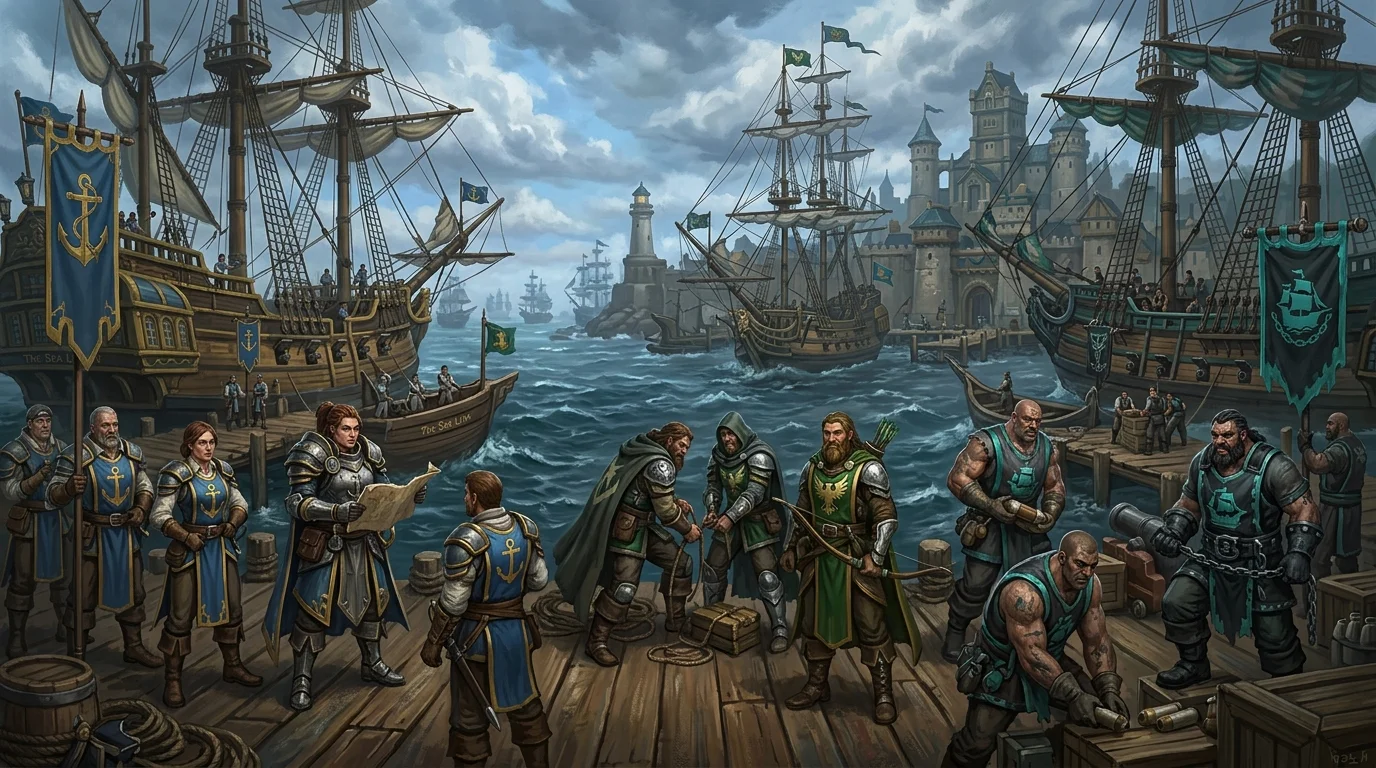
Kul Tiras in depth: the three houses, naval tradition and independence as an identity
Kul Tiras does not understand himself as anyone’s “subordinate ally”
In Battle for Azeroth, Kul Tiras returns to the center of the map as a naval power. But reducing the nation to “the land of ships” misses the best of the story. Kul Tiras is a society built on reputation, regional autonomy and the memory of betrayal.
This detail matters because it explains why reconciliation with Jaina and the Alliance costs so much. Kul Tiras does not react only with military calculation. He reacts with wounded pride.
Kul Tiras as a nation
Naval power and own identity
Kul Tiras grew as a maritime kingdom, with its economy, defense and collective imagination focused on the sea. This produced a very clear identity: the world may depend on kul tyrants, but kul tyrants don't like depending on the world.
Independence as a value
Even when cooperating with the Alliance, Kul Tiras does not disappear from it. The kingdom preserves a sense of exceptionalism that passes through lineage, nautical tradition and local authority.
Houses and the political fabric
Proudmoore
Proudmoore House embodies the naval, military and symbolic center of the kingdom. It is the line most associated with fleet command and the external role of Kul Tiras.
Waycrest
Waycrest represents land, ancient tradition, and the weight of Drustvar's interior. It is a house deeply linked to local heritage and memory.
Stormsong
Stormsong guards the spiritual and ritual dimension of the sea. The tidesages are not folklore detail. They are part of the structure that makes the kul tyrant navy possible.
And Ashvane?
Even though the focus tends to be on the three main houses of BfA, Ashvane is essential to understanding the political rot of Tiragarde Sound. It serves as proof that pride and prosperity also generate internal opportunism.
Jaina and the political wound
Why Kul Tiras closed its doors
The figure of Jaina carries, for the kingdom, not just absence, but abandonment and shame associated with the events that surrounded Daelin Proudmoore. The problem was never just geopolitical. It was family, public and national at the same time.
Reconciliation is not a cheap forgiveness
Battle for Azeroth is right to treat this return as an emotional cost, not as a quick “we accept again” scene. Kul Tiras needed to decide whether to accept Jaina not in spite of the past, but in the face of the past.
Stormsong, Azshara and the horrors of the sea
Corrupted tidesages
Stormsong Valley shows that the kingdom's maritime strength depended on vulnerable spiritual institutions. When the tidesages fall under hostile influence, Kul Tiras loses more than religious support. It loses a piece of the gear that supported its naval grandeur.
The sea as power and threat
This helps differentiate Kul Tiras from other human kingdoms. The sea there is never just a commercial route. It is the origin of wealth, discipline, mysticism and ruin.
What's unique about Kul Tiras
Loyalty, reputation and regional pride
Kul Tiras is a nation where politics always seems personal. Houses, surnames and regions are not accessories. They are the way power is lived.
That's why the kingdom seems so dense. He doesn’t just offer “ships for war.” It offers a worldview in which local honor, autonomy, and reputation matter as much as military victory.
Kul Tiras in a quick read
| Element | What does it represent | |----------|------------------| | Proudmoore | naval command and central authority | | Waycrest | territorial tradition and ancestry | | Stormsong | sea, rite and spiritual support | | Ashvane | internal corruption and opportunism | | Jaina | reconciliation with the past |
Minimum recommendation
Kul Tiras becomes more interesting when you read the kingdom as a society of houses, memory and regional pride.
Ships are part of the story.
The place's true strength lies in how it transforms loyalty into political identity.
Posts Recomendados
Kul Tiras, Jaina and the reunion with the past
Kul Tiras in Battle for Azeroth brings Jaina back to the place where her family history, her guilt and her political legitimacy intersect most painfully.
Zandalar in Depth: The Cradle of Troll Civilization and the Legacy of Rastakhan
Zandalar is more than a BfA setting: it is the historic heart of troll civilization, an empire shaken by betrayal and redefined by Talanji's rise.
Magtheridon: the pit lord of Hellfire Citadel
Who is Magtheridon: the pit lord who ruled Outland, lost the Black Temple to Illidan and became the blood source for fel orcs in Hellfire Citadel.
Saurfang and Dranosh: father and son of the Horde
Varok and Dranosh Saurfang: the son hidden in Nagrand, his death at the Wrathgate, the Deathbringer in ICC and the father who takes him home. Full arc.