
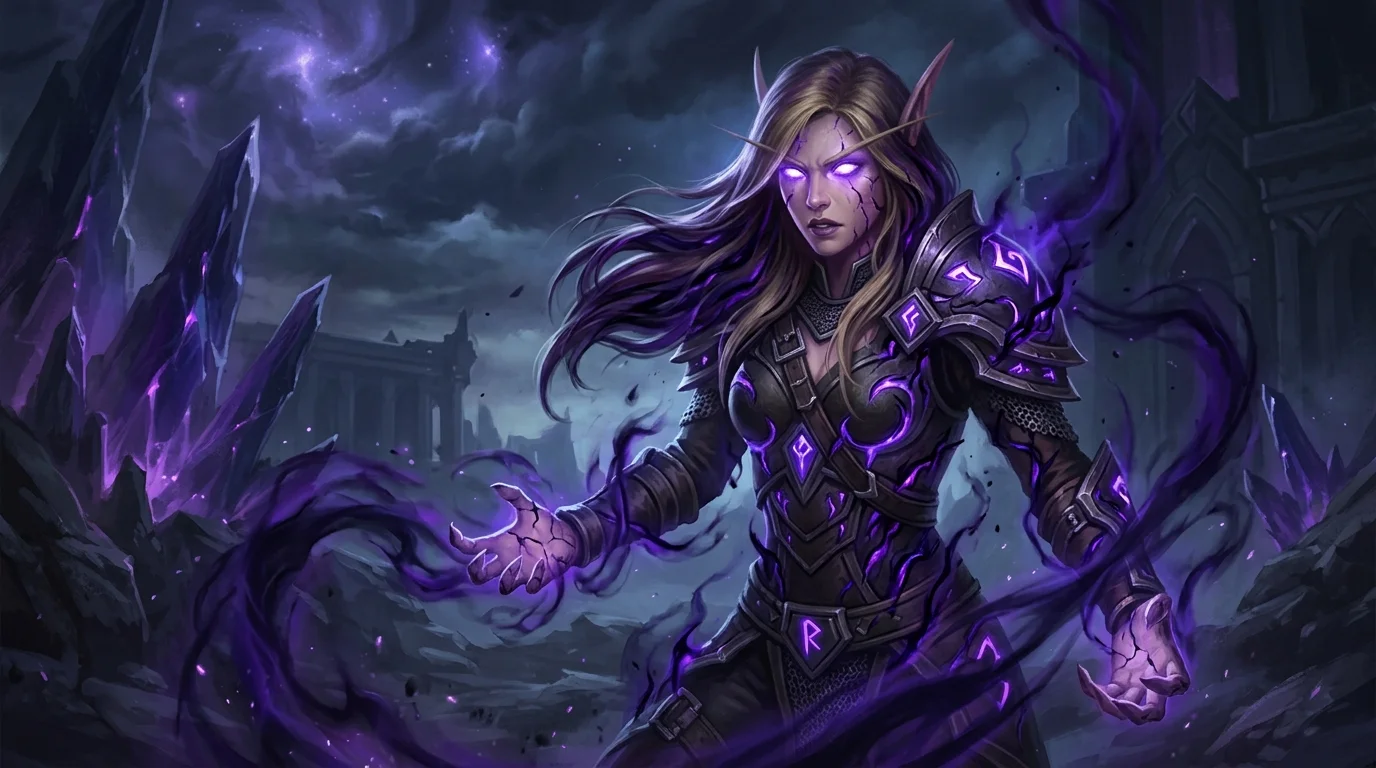
Void Elves are not lost elves — they are elves who chose risk
The Void Elves, or Ren'dorei, exist in a very specific discomfort zone of the lore. They are not classic High Elves, they are not standard Blood Elves and they are also not creatures fully dominated by the Void. They live in the middle of the road.
This is precisely their fun: they represent the attempt to use a very dangerous force without allowing oneself to be consumed by it.
How blood elves became Ren’dorei
The starting point is a group of blood elves who began to study the Void in a forbidden way. Rather than treating this energy as inevitable corruption, they sought to harness it as a tool.
When this experiment gets out of control, two decisive factors come into play:
- exile
- the intervention of Alleria Windrunner
Alleria does not “create” the Void, but provides a model, language, and discipline so that these elves do not completely lose their way.
Alleria's role
Alleria is important because it proves that the Void can be faced without complete submission. She does not treat him as a simple source of evil. Treat it as power that requires constant self-control.
This makes it a bridge between two readings:
- the classic fear of the Void
- the possibility of a disciplined coexistence with him
The Ren’dorei are born exactly on this bridge.
Embracing the Void is not the same as being consumed by it
This is the most important point in Void Elves lore. The Void whispers, corrodes, offers power and destabilizes. The Ren’dorei’s objective is not to pretend that this does not exist. It's learning to function despite it.
This creates a very unique identity
- live with permanent risk
- live in constant mental discipline
- are viewed with suspicion by almost everyone
- have enormous narrative value in stories about temptation, identity and control
The tension with blood elves and high elves
For many elves of Quel'Thalas, the Void Elves represent two offenses at once:
- flirt with a forbidden force
- Uncomfortable mirror of one's own history of magical dependence
They remember that the elven lineage has always been close to vices and excesses. They only changed the form of temptation.
What does this mean for Midnight
Midnight puts the Void at center stage and, therefore, the Void Elves are no longer a side curiosity. They saw one of the most important lenses through which to read the expansion.
They matter because:
- already live under pressure from the Void
- have a direct connection with Alleria
- tension Quel’Thalas inside and out
- embody the theme “using the abyss without falling into it”
Minimum recommendation
To understand Void Elves without simplifying:
- Don’t treat Ren’dorei like “spoiled” blood elves
- see Alleria as a philosophical key, not just a political one
- differentiate disciplined use of the Void from total corruption
- remember that the tension with Quel’Thalas is about identity, not just military
- read Midnight thinking about them as a bridge between threat and resistance
Posts Recomendados
Lightforged Draenei
Lightforged Draenei aren't just brighter-looking draenei: they are a people shaped by millennia of war, discipline and total sacrifice for the Light.
Locus-Walker: Alleria's ethereal master and what he knows about the Void
Locus-Walker masters the Void without losing himself, trained Alleria when almost no one understood that power and carries the memory of K'aresh's fall.
Saurfang and Dranosh: father and son of the Horde
Varok and Dranosh Saurfang: the son hidden in Nagrand, his death at the Wrathgate, the Deathbringer in ICC and the father who takes him home. Full arc.
Dalaran in Northrend: why the city flew
Dalaran in Northrend: why the Kirin Tor took the city into the sky over Crystalsong, who rules it and what the Violet Hold keeps locked. See the summary.