
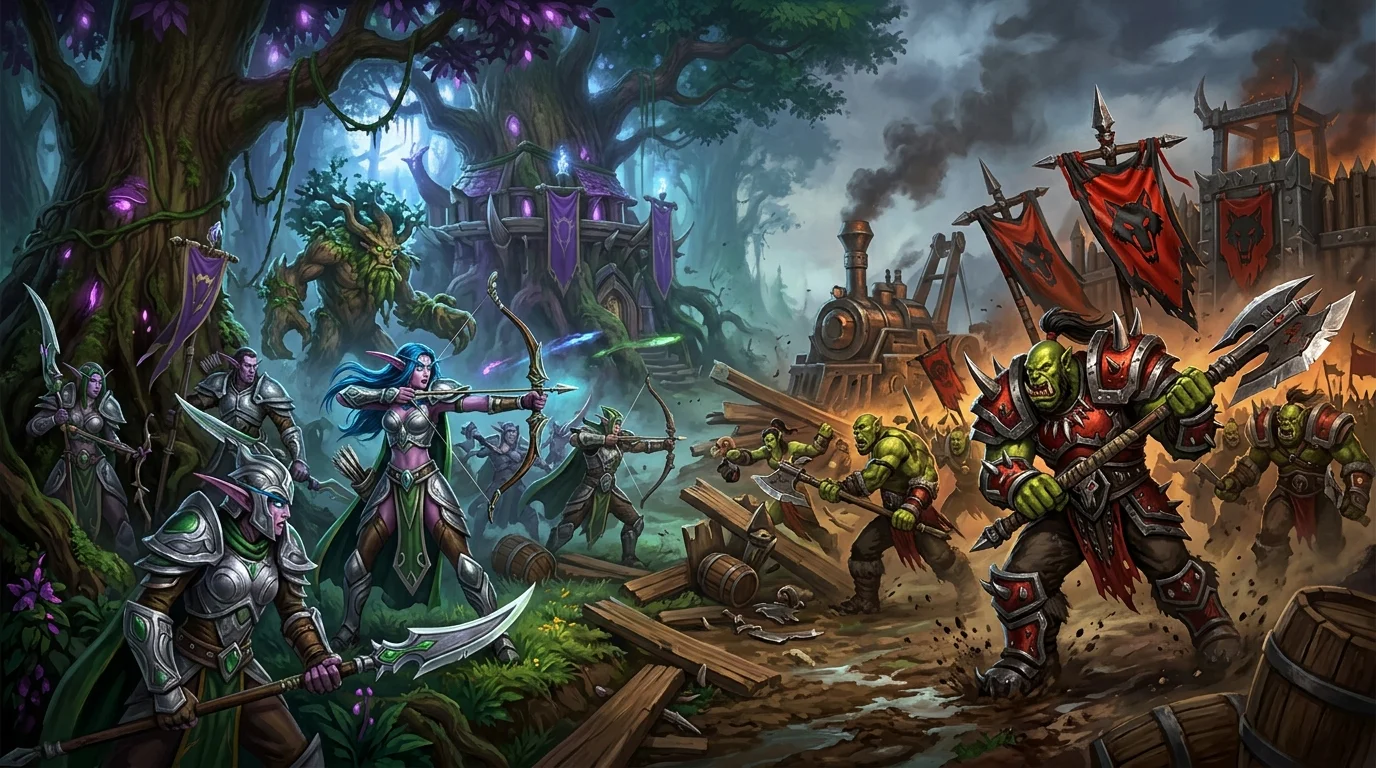
Warsong Gulch: Warsong Orcs, Sentinels, and the War for Ashenvale Forest
Warsong Gulch is the simplest BG to play and one of the most complex to justify
The basis of its lore is excellent:
- the Warsong need wood and advancement to sustain orc reconstruction
- the Night Elf Sentinels defend Ashenvale as a sacred forest and protected territory for eons
There is no beautiful and easy solution. This is what makes the map work so well.
The Warsong clan
The Warsong Clan has enormous weight within orc history, especially because of Grommash Hellscream. It is the clan of aggression, mobility and warrior impulse. But in Ashenvale their narrative is not “let’s destroy for the sake of destroying.” There is a concrete need:
- wood
- infrastructure
- reconstruction
- territorial expansion of the Horde
This is important because it prevents the conflict from being just a caricature of an aggressor.
Ashenvale and the Sentinels
On the other side, the night elf Sentinels are not protecting just any resource. They are protecting an ancient, sacred forest linked to the very identity of the Kaldorei people. For them, the Warsong offensive is not a legitimate search for supplies. It's profanation.
This difference in reading sustains the entire conflict.
Progress vs preservation
Warsong Gulch is probably the best classic battleground to pose this question: To what extent does the need for survival and development justify devastating a sacred environment?
The orcs can answer one thing. The night elves, another. And Warcraft never solves this comfortably.
What the BG represents in the greater lore
The map is small, but the theme is huge. It summarizes an ongoing conflict between Horde and night elves:
- work / reconstruction
- versus preservation/sacredness
- material need
- versus ecological and spiritual continuity
That's why Warsong Gulch seems eternal. Because the problem it symbolizes is never really resolved.
Final summary
Warsong Gulch pits the Warsong clan, famous for their Grommash heritage and the Horde's aggressive stance, against the Sentinels of Ashenvale, guardians of a sacred night elf forest. The orcs advance out of need for wood and infrastructure, while the Sentinels resist to prevent the destruction of a territory that is an essential part of their identity. The battleground transforms a simple flag dispute into a permanent symbol of the clash between material progress and spiritual preservation.
This is why Warsong Gulch remains so strong: it shows that some wars in Warcraft don't end because both sides have all too real reasons to keep fighting.
Posts Recomendados
Alterac Valley: the Frostwolf clan and the Stormpike Dwarves fighting over a valley that no one should occupy
Alterac Valley is classic WoW's most lore-heavy battleground: orc exile, dwarven archaeology, historical claims and two sides that never agree to retreat.
Arathi Basin: the Defilers, the League of Arathor, and the war for the plateau's resources
Arathi Basin is WoW's most logistical battleground: resources, position and infrastructure. Behind the flags, human claims clash with Forsaken occupation.
The Elemental Planes: Ragnaros, Al'Akir, Neptulon and Therazane
The Elemental Lords are more than raid bosses: they embody Azeroth's primal forces and the tension between titanic order and elemental chaos. Learn more.
Magtheridon: the pit lord of Hellfire Citadel
Who is Magtheridon: the pit lord who ruled Outland, lost the Black Temple to Illidan and became the blood source for fel orcs in Hellfire Citadel.