
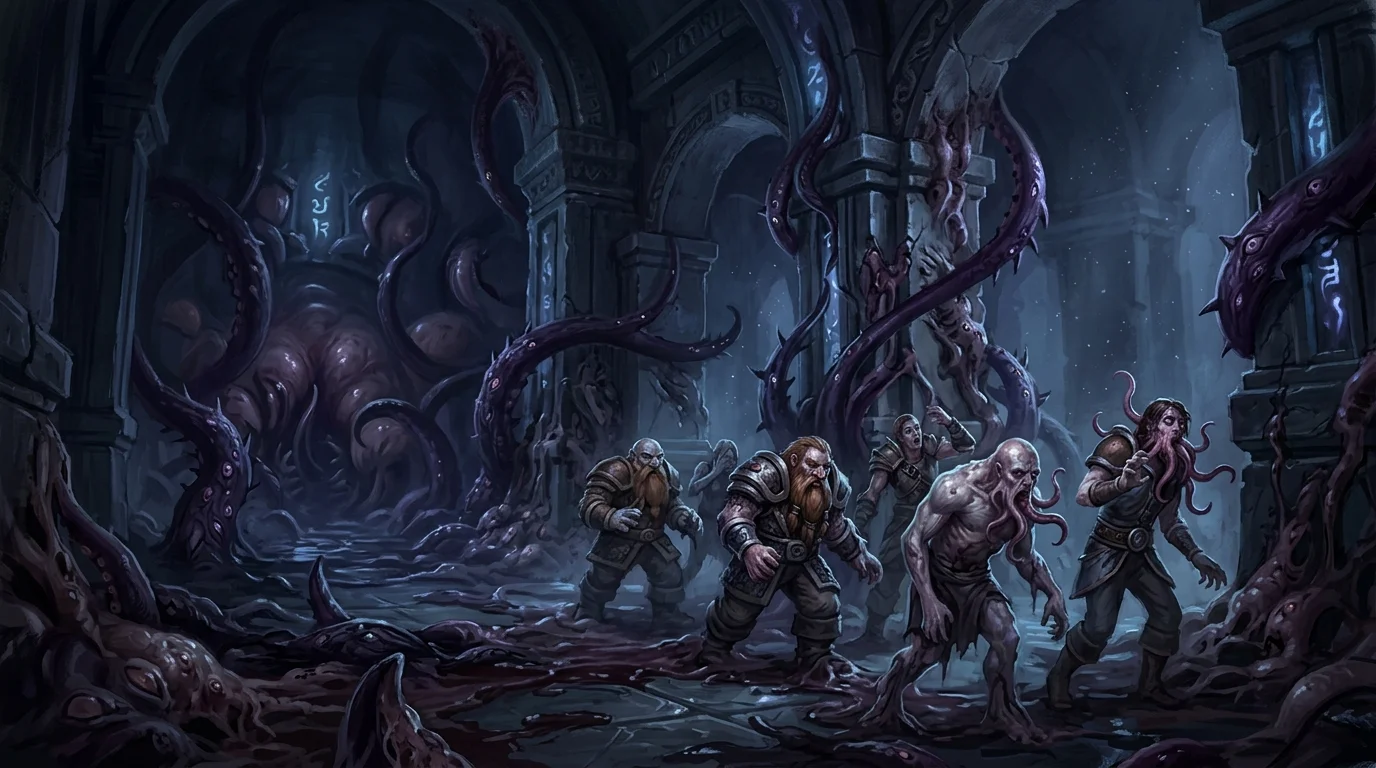
What is the Curse of the Flesh
When the Titans built Azeroth, they created guardians and workers using stone, metal, and magic. The Earthen were rocky constructs that excavated and shaped the terrain. The Vrykul were stone warriors who protected titanic installations. The Mechagnomes were mechanical engineers.
None of them were made of meat.
The Curse of the Flesh is the corruption that Yogg-Saron injected into these constructs. Slowly, over millennia, the titanic constructs began to change: their stone skin softened, their internal mechanisms became organs, their rigid code became instinct and emotion.
They became mortal.
The races that were born from the curse
Earthen → Dwarves and Troggs
The Earthen split. Some of them managed to partially resist the curse — these became the dwarves, preserving some of their original robustness but now made of flesh and blood.
The other part was completely corrupted and degenerated: the troggs. If you've ever wondered why troggs exist in Gnomeregan, Uldaman, and so many places linked to titanic ruins, now you know: they're what happens when the Curse of Flesh acts without resistance.
Vrykul → Humans
The Vrykul were immense stone warriors. After the curse, they became giants of flesh — and their children were born even smaller, weaker, completely devoid of their parents' greatness.
The Vrykul called these children "little" and "weak." Some killed them. Others hid them. Those who survived migrated south and, over millennia, became the first humans.
This is in WotLK directly: in Howling Fjord you meet the Vrykul and discover this story.
Mechagnomes → Gnomes
Mechagnomes were pure mechanics. The Curse of the Flesh turned them into the gnomes — still fascinated by technology, still brilliant engineers, but now biological.
Why Yogg-Saron did this
The Curse of the Flesh was not a whim. It was a strategy.
Titanic constructs of stone and metal are difficult to corrupt—their logic is ironclad, their loyalty is absolute. Beings of flesh are another story: they feel fear, anger, ambition, desire. They are much easier to manipulate.
By turning Azeroth's guardians mortal, Yogg-Saron didn't destroy them—he made them vulnerable. Each race that descends from a titanic construct carries, to some extent, the possibility of being corrupted again.
The irony of mortality
There's an interesting inversion here: the "curse" that created the deadly races also created everything that makes those races interesting. Emotion, creativity, free will, culture — all of this only exists because Yogg-Saron broke the original programming of the constructs.
The Titans wanted perfect, obedient guardians. What Azeroth gained was something much more unpredictable: races choosing their own destiny.
This does not make Yogg-Saron a benefactor. But it makes the Curse of Flesh one of the most philosophically dense lores in WoW.
Posts Recomendados
Titans vs. Old Gods
Titans vs. Old Gods is the core conflict of WoW's cosmology. Without them and Azeroth's world-soul, almost everything that came after seems random.
What are Worldsouls
Worldsouls explain Azeroth: it is not just a planet but a living being in gestation. All that Old Gods and Titans fight over in WotLK exists because of it.
The fall of the Vrykul and the birth of humanity
The fall of the Vrykul explains human origins: humans descend from vrykul touched by the curse of flesh, which changes how you read Northrend in WotLK.
Magtheridon: the pit lord of Hellfire Citadel
Who is Magtheridon: the pit lord who ruled Outland, lost the Black Temple to Illidan and became the blood source for fel orcs in Hellfire Citadel.